The prodigal son

This is a way to tell the story of the prodigal son, using ribbons.
HEALTH WARNING: I’ve done this exercise with both with children and with adults, and it is quite powerful – essentially it’s psychodrama, and you should only do it if you’re confident about facilitating this kind of process. It’s always worth having people on standby for participants to talk to if it stirs up difficult emotions.
Begin with three people (representing the three characters in the story) standing in a triangle, each of them holding the end of a ribbon in their hands, so that the ribbons connect them to each other – ie the people are the corners of the triangle and the ribbons are the edges of the triangle.  I use really nice ribbon, and talk up how a loving relationship is something really precious and beautiful.
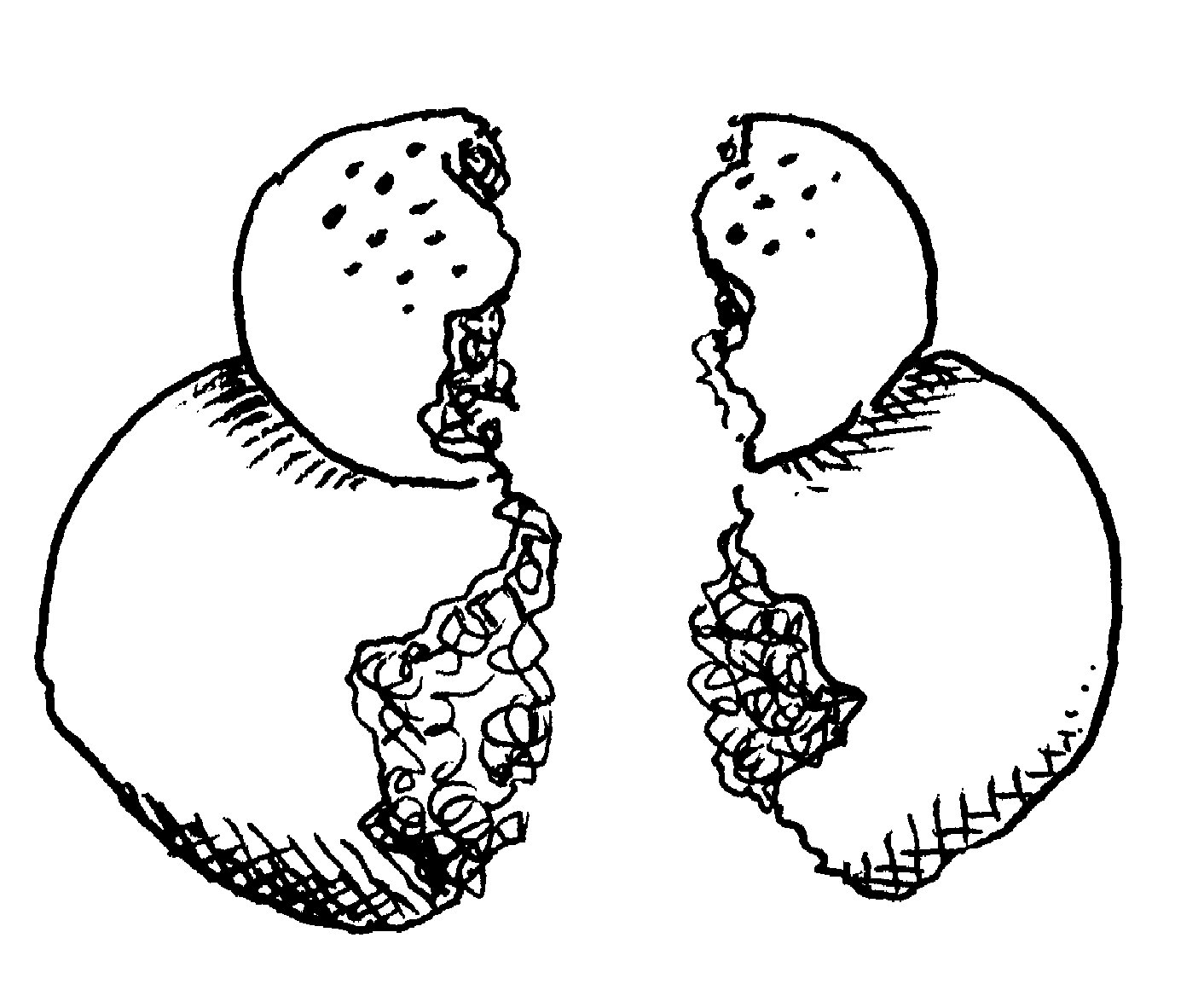
When we get to the bit about the younger son running off, I use a blunt pair of scissors to cut the ribbons connecting the younger son from the other two characters. I invite everyone to look at how the ends are raw and ragged, and how the father and the older son are left with the loose ends (and so is the younger son, though he is too busy having run to realise it!). When we get to the part about the younger son returning to his father, we hold up the two ends of the ribbon between those two characters, and look again at their frayed ends. We wonder about what it would take for them to be joined together, and how it looks like the ribbon will never be whole again – the ends are just too frayed. Then I point out that the son had walked home, and the father had run to meet him, and get the two people to take a step closer to each other – close enough that there is enough slack in the ribbon to tie the ends in a knot and then a bow. The ribbon is joined again, and it is more beautiful than before – and the father and son are closer than they had ever been. The son now knows the difference between being his father’s servant and being his father’s child.
Meanwhile, the older son is out in the fields. The ribbon between him and his brother is still in tatters. And when he refuses to come in, he is cutting himself off from them both – here, I cut the remaining ribbon, between the father and the older son. Now it’s the older one who is out on his own.  This is where Jesus ends the story, so that we can decide how to finish it. 
So we wonder together about how we want the story to end. We look at the sad, ragged ends of the ribbon, and the relationships that are still broken, and ask ourselves what it would take to mend all this in real life, not just in an illustration. We reflect that the older son still thinks of himself as a servant, and needs to realise, like his little brother eventually did, that he is his father’s child, and is loved beyond all measure.
Participants are usually desperate to tie up the remining ribbons, so we do that, in the same way, with the three people having to step closer to each other, so that there is enough ribbon for a nice bow on each side of the triangle. We see how the three characters are closer than ever, and we wonder whether that’s what happens with forgiveness – we each have to step towards each other, and the relationship at the end is truer and more beautiful than at the start. We tie the bows slowly to give us time to think about how we go about mending broken relationships in real life.
I end by giving everyone a small length of ribbon to take home – a reminder that sometimes we all have ‘loose ends’ and that forgiveness isn’t easy, but that they could trust God to help them hold the ragged ends, and help us find ways of mending things, but in ourselves and between ourselves and others.  We hold our ribbons as we pray in silence for a while, holding before God the things that are unresolved in our lives. We name silently the people we need to reconcile with, and the people who, for whatever reason, we can’t reconcile with, trusting God to hold their loose ends, too. 

All Age All Saints

This activity works really well using Hebrews 11, but could also be adaopted for other passages that mention multiple people of God.
Prepare some coloured paper people, several per colour and write names on them as follows: 
Red: the heroes of the faith in Heb 11
Orange: the first disciples, St Paul etc
Yellow: early/mediaval saints
Green: reformation and modern saints
Blue: ‘those who have influenced us or shared the faith with us’ – may be generic or left blank
Purple: blank (you need as many of these as there are people in the congregation)
Pink or brown or grey: blank (again, as many as there are in the congregation, with some spares)
Write the names on the people and hide them round the church before the service.During the sermon, send children out to gather one colour at a time, and bring them forward – pin them or stick them to a display at the front of the church (in the form of a rainbow, or just round the edge of the display area so you can put the purple ones in the middle, or round the pillars, or whatever works in your building).

For each colour, talk about some of the characters and what they did to share the love of God. For the blue ones you may have things like ‘mum’ or ‘grandad’ or ‘godparents’ or ‘teacher’ or you could leave those blank and ask for suggestions, writing them on at the time.

When it gets to the purple ones, get the children to give them out to everyone so that they can write their own names on, and then bring them forward to be added to the display. You might like to put the purple ones all together in the middle, with the ‘saints’ around them (like the great cloud of witnesses).

You can also have an extra set of people (also blank – maybe pink or brown or grey) that are ‘those who are get to come’ – the next generation, people who don’t know God yet, people we might invite to church. These people are to be taken home by the congregation (they don’t need to have names on them) to remind them to share the love of God with everyone they meet, because that’s what saints do.

Ordination explored

Have you ever taken a small child to an ordination? It’s really important for children who have a significant adult being ordained to be able to take part and support that person at such a joyful and significant moment. It’s also really important to affirm that children are full members of the body of Christ- especially as we celebrate the way that God calls each of his people to ministries of different kinds.

But ordination services can be long, and while there’s lots going on, it may not feel very accessible to children.  To help children to engage with the ordination service and it’s themes, we* have put together some resources that you are welcome to download. These are:

  • An ‘Ordination Explored’ booklet containing pictures, questions, quizzes, and much more, which can be used during the service.
  • A ‘Churchy Jobs and Titles’ bingo sheet to help children work out who is who
  • A leaflet for parents with some ‘hints and tips’ for parents and carers for making the most of what is an amazing and joyful occasion

There are also some practical ideas to help cathedrals and DDOs to think about how they welcome children and families at what can be quite complicated occasions!

These files are available as .pdf files.  If you are printing them out, we recommend cream or light yellow paper, as this is generally most easily read by people with dyslexia or visual impairments. You should also be able to print out the resources twice the size if that would help. If you would like to receive the files in .docx format so as to be able to edit them for greater accessibilty, please email us using the contact details in the leaflets.

Ordination children’s booklet-3

Churchy jobs and titles bingo

Ordination Explored hints and tips for parents and carers

Ordination Explored hints and tips for cathedrals

New for 2019: the episcopal edition of the booklet, for those attending a consecration service – click here to see and download the new booklet.

The booklets were made by Elizabeth Lowson and Ally Barrett, with technical help from Dan Barrett. Lots of people helped us with good suggestions, and other people helped by testing the booklet out in real life.  We would like to say thank you to them all.

Harvest resources

It must be time to post something about harvest – here’s a collection of stuff that might be useful.

Some all age ideas

  1. The four corners of God’s love (not my idea – I learnt it from a Sally Army officer ages ago!)
    Start with a large square or rectangular piece of paper, and announce that this is the four corners of God’s love. Say, ‘It’s my piece of paper, so it’s the four corners of God’s love for me.’  Count them out to make sure.
    Ask, ‘What would happen if I cut off one of my corners and gave it away?  I have four, but if I gave one away, how many would I have?’  You may get the answer, ‘three’.
    Cut off one corner, give it to someone in the congregation, and count your corners again. You have five! You had four, you gave one away, and you have five. And the other person has three. That’s eight whole corners of God’s love!
    Try it again with another corner. And get one of the recipients to try it with one of their corners etc. Keep counting up the new total of corners until everyone loses count.
    Reflect on generosity, abundance, giving, God’s providence, blessings given and received….
    Encourage everyone to take their ‘corner’ home as a reminder.
  2. Ready steady cook
    Ask members of the congregation to come forward and pick out five items from the donated produce and say what they’d cook with them – get everyone to vote on the best idea.
    Reflect on how bringing the gifts together means we can do amazing things with them – maybe we each brought only one gift, but God multiplies what we give.
  3. World map
    Draw a rough outline of a world map on a double bedsheet and lay it down on the floor  – as people bring their gifts of produce, invite them to place their gift somewhere near its (possible) country of origin. Have some information displayed about some of the key producing nations and what life is like as a farmer/producer there. During your talk, look at some of the foods, and trace their journey from field/forest/ocean to plate.  You could
    (a) Say a prayer for each stage of the food’s journey
    (b) Talk about fairtrade and related issues
  4. Place mat grace
    Give everyone an A4 piece of paper with a simple place setting drawn on it, and some pens. You can also provide glue, scissors and old food magazines for those who like to cut and stick.
    Invite people to decorate their plate with words or pictures that remind them to say thank you for their food.
    Teach everyone a simple grace that they can use at lunchtime when they get home. Invite them to write it on their placemat. This might be something quite traditional, or something sillier – or have a variety to choose from. Popular options might be:
    (a) For these and all God’s blessings may his holy name be praised.
    (b) Rub a dub dub, thanks for the grub!
    (c) (sung) One, two, three, four, five, thank you God that I’m alive, six, seven, eight, nine, ten, thank you God for food, Amen.
    (d) (sung) Praise God from whom all blessings flow, praise him all creatures here below, praise him above ye heavenly host, praise Father, Son, and Holy Ghost.
    Alternatively, you could write a variety of graces on the reverse of the paper so that they’re all provided.
    If you have the facilities, you could offer to laminate the placemats while people are having coffee after church, so that they’ll last longer.

Poem

Here is the original (longer) version:

We bring our gifts:
The first-fruits of our labour,
or perhaps the spare we do not need,
(an offering to mitigate against our greed).

To the church we bring them,
and into the hands of Christ we place them,
and we say, ‘Take this,
and do with it some miracle:
Turn water into wine again,
or multiply my loaves and fish
to feed a crowd again.’

And Jesus takes them from our hand,
this fruit of the ocean, this product of the land,
and blesses them, accepting back
what always was the Lord’s.
Our gifts will fill the lack
of hungry people,
putting flesh on words
of charity, and making folk
in our small corner of the world
more equal.

We know there is enough for everyone.
But once the leftovers are gone –
taken to the homeless, hungry poor –
what of those twelve empty baskets standing idly by?
Can there yet be more
that we can ask our Lord to multiply?

Into those baskets therefore let us place ourselves,
those parts of us that need transforming,
grace and strength and healing,
the gifts in us that need to be increased and shared
with a greater generosity than we may be prepared
to offer on our own account.

For we are God’s rich and splendid bounty,
seeds, sown and scattered by the Lord in every place.
the human race:
the crowning glory
of the ever-evolving creation story.
We thank the Lord
that he does not just separate wheat from tare,
but takes our very best
then turns us into far more than we are.

And here is the shorter version:

We bring the spare we do not really need
(for surely God will honour all we bring
although it cannot make up for our greed).
And place into Christs’s hands our offering:
“Turn water into wine again,” we say,
“and multiply my token loaves and fish
to feed another hungry crowd today.”
Our gifts, we know, will put some flesh
on words of charity. Then into those
twelve empty baskets, let us place the gifts in us
that need to be increased and shared
with greater generosity than we may be prepared
to offer on our own account.
For we are God’s most rich and splendid bounty,
sown as seeds and scattered by the Lord
in every place.
the human race:
the crowning glory
of the ever-evolving creation story.
We thank God that he does not only separate the wheat from tare,
but takes our very best then turns us into far more than we are.

oOoOo

Clipart and assorted autumnal pictures

  wheat sheaf clipart       The whole world in his handfeeding of teh 5000

harvest     foodharvest festival clipart


hands held out     19th sept 2014 005broken bread


Palm Sunday Song for children

1. He’ll be riding on a donkey when he comes (x2)
He’ll be riding on a donkey,
Riding on a donkey,
Riding on a donkey when he comes.

So we’ll sing hosanna when he comes (x2)
So we’ll sing hosanna, sing hosanna,
Sing hosanna when he comes.

2.We will all come out to meet him when he comes…

3. We will throw our cloaks* before him when he comes…

4. We will wave our palms to greet him when he comes…

(*or coats, or whatever)

To the tune ‘she’ll be coming round the mountain’. You’re welcome.