
A recent conversation on twitter revealed that some churches have never thought of including a welcoming ‘First time in church?’ page on their website, while those churches that do have such a page are astonished that anyone wouldn’t. So I thought I’d put together some ideas to help those churches for whom this is a new idea.
Why have such a page?
Most churches think they are welcoming – and many really are. But it’s fair to say that the majority of people who attend church regularly have probably forgotten how scary it can be going to church for the first time (or the first time in a long time). Even many church entrances are pretty intimidating – big old wooden doors with a latch that you need a ‘knack’ to open spring to mind…. In an era where most of us look up a venue online before we attend,  it makes sense to try and put ourselves in the shoes of someone who may be thinking about coming to church, but isn’t sure what to expect, and ensure that somewhere obvious on our church website there’s a page that will help new people cross the threshold with confidence.
Who is it for?
Your ‘first time?’ page may be read by a wide variety of people:
- Wedding couples (and their families) coming to hear banns;
- People who have just moved to the local area;
- People who have brushed up against church through enquiring about having their new (or not so new) baby baptised;
- People going through a tough time and seeking solace, such as the newly bereaved;
- People who have had no experience of church before but for some reason feel prompted to explore;
- People who have had a difficult past experience of church – including survivors of abuse and people who have left previous churches due to conflict;
- People who have strong memories of church from many years ago or in a different tradition, for whom the liturgy and atmosphere and expectations may be unfamiliar;
- People of all ages and all demographics – older people, young people, families (with or without children), single people, people for whom English is not their first language, people with and without disabilities, people from a range of socio-economic backgrounds…..
What would you include on the page?
This is a big question, especially given the variety of people who may look at the page! You don’t want to end up with a page that tries to do everything in detail, and ends up being over-long and wordy.
- Clear headings will help sort the page content so that people can pick out the bits that apply to them.
- Simple, warmly-phrased sentences that capture the main points can include links to more detailed information elsewhere on your website. A good example of this would be a page introducing what holy communion is, to avoid you having to try and explain it on your ‘first time’ page. Another piece of good practice is to include a link to your ‘contact us’ page so that people know it’s OK to be in touch if they have particular questions.
- You may find that once you start, you realise that there is a huge list of things about your church that will make no sense to a visitor or newcomer. This is an opportunity to think about what needs to be on your main ‘first time?’ page, what needs to be available through clickable links, and what you might be able to change about your church’s current practice in order to make church more accessible to people who are new.
Here are a few examples of ‘First time?’ pages:
Holy Nativity (Mixenden & Illingworth)
St Paul’s, Letchworth
St Peter’s, Harton
You probably want to begin with some kind of welcoming sentence that will reassure people that they can come as they are. If you already use one of the excellent inclusive ‘all are welcome’ statements on your homepage, on the ‘first time?’ page you’ll want to have something generally warm and friendly.
Some of the page will be information: a note of the main service times (and what kind of service they are), and a link to further details is a good idea. This is especially true around the major festivals and special occasions when there may be different services from usual, and when people are most likely to come if they aren’t regularly in church: Christmas, Easter (to a lesser extent), Harvest (depending on where you are), Mothering Sunday, Remembrance, All Souls (if you invite funeral contacts) etc are key times.
 A note about accessibility is essential. For those attending with small children, or who have disabilities, or use a hearing aid, or need a large print copy of any printed material, it’s incredibly helpful to know how easy it’s going to be to get in and out of church and to take part in the service. You should also say whether you have toilets and whether they are accessible – this can be make or break for people, for a whole host of reasons. There is some helpful basic advice about online accessibility here.
People are reassured by knowing roughly what to expect, and what may be expected of them – things like any any restrictions on seating (or reassurance that you can sit where you like), whether a collection is taken (and that they don’t have to feel they can’t come if they can’t afford to give), and that there will be standing, sitting and kneeling at various points (but that you are welcome to sit if you can’t stand etc). It’s also worth saying a little bit about what happens at communion, if you’re services are Eucharistic (eg who is able to receive, what to do if you want a blessing, and what to do if you need gluten free wafers or if you need communion bringing to your seat).

It will be important to tell people whether children’s groups are in operation, and that children are welcome both in church and in the groups. Is there a ‘quiet room‘ for any families who need it? And might it be a good idea to reassure breastfeeding mums that they’re welcome to feed their children in the church or to go somewhere more private (and comfortable – not the toilets!) if they wish?
An offer of personal welcome and guidance through the service would be great, if you have the personnel to carry it off in practice – knowing that there’s someone who can guide you through the service and navigate finding the right pages will be really reassuring. You would need to identify those people in advance and make sure that the people on the door know who they are – gently guiding a newcomer through an act of worship is a skill.
Include pictures! It’s helpful to include pictures of:
- The doorway, ideally with a diversity of people going through it – this allows you to show how what kind of ramp you have or if you have flat access, and also allows people to imagine getting into the building themselves.
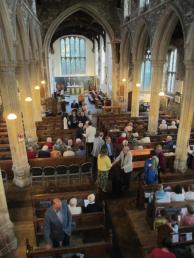
- The interior of the church, so that people can get a feel for how it is laid out.
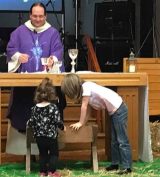 Pictures with people in – ideally demonstrating the diversity of the congregation, so that people who haven’t been before can see someone that makes them feel like they might fit in.
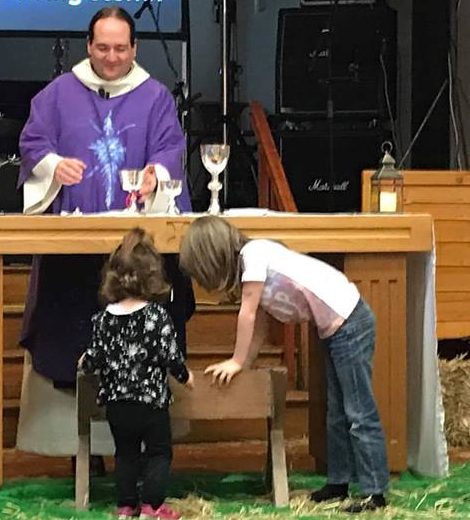
- A picture of what worship looks like at your church – perhaps including holy communion if that is your pattern.
- Make sure any pictures also have alt.text for those accessing your site who have visual impairments.
Most of this post assumes that we’re talking about welcoming people to acts of worship, but if your church is generally open and you welcome people who want to visit and spend some time there, this is absolutely worth flagging up – there are plenty of folk who don’t feel comfortable with participating in a service but who do want to seek out a sacred place to encounter God or simply to get some peace and quiet.
Who should write the page?
Your page is most likely to work if it is written or co-written by someone who is relatively new to your church. They will have a fresh memory of what it felt like to attend for the first time, what confused them, and what, if anything, made them feel less welcome than you’d like them to have felt! They may be able to help you think through what register of language you will use, and the extent to which you might use technical terms (with explanations) or try to go jargon-free. An interesting exercise might be for you to write down what you think should be on the page, and ask your ‘relatively new person’ to do the same, and then compare notes.
Tip: It’s also a good idea every so often to try and experience worship in a completely different tradition, or even of a different faith. Among all the other reasons to do this (and there are many!) it can give us a real insight into what it’s like when you go along to something and you don’t know the ‘rules’ or how (or whether) you will be welcome there. If you have a good experience of welcome there, think about what they did that helped you.
Finally, the page should be ‘owned‘ by the ministry team, PCC (or equivalent) and congregation. Welcome isn’t something that is one person’s job, it’s everyone’s job, so everyone needs to sign up to what is stated on the page.
Is it true?
Writing a ‘First time?’ page is partly descriptive: what is it actually like coming to this church? It is also partly aspirational and even prophetic: attending to the needs of those who are new, and listening to the voices of those who were new recently can confront us with some difficult truths about how welcoming we really are, and how well we communicate that welcome. If we say, ‘Children are welcome in All Saints’ we must ensure that they really are. If we say, ‘There is no dress code at St Mary’s – you are welcome to come as you are’ we must consider how it might feel if someone turned up in ripped jeans and found the whole congregation in blazers and floral print dresses… Writing a ‘first time?’ page can be a catalyst for an honest self-audit, and for reviewing the church’s welcome, which includes everything from the website to the notice board to the doorway to the worship to the coffee afterwards, and more. Writing a great ‘first time’ page can be just what a church needs to make what they have written true in real life.
Got some good ideas?
If you have a ‘First time?’ page that you’re really proud of, do comment below with a link and I’ll happily add it to this post. If you have other good practice ideas about what to include in such a page, again, please do comment below so that everyone who reads this can benefit from others’ experience. Thanks so much, everyone.





 reverendally.org