John 2.13-22 (Lent 3 B, 2012)
We’re used to hearing this story as part of Holy Week, because the other gospel writers place the event towards the end of Jesus’ ministry. The fact that John puts it right at the start shows us that it’s a crucial part of Jesus’ manifesto. It shows us who he is and what he is about, in a dramatic way – and it shows the other side to his identity from that which was revealed at the wedding at Cana, earlier in chapter 2.
Today, we see someone outspoken, courageous, prophetic, unafraid to challenge authority, and concerned to get to the heart of what really matters, whatever it takes.
THis is a story about the Temple, but it’s very much a story about Jesus himself. In fact, Jesus’ choice of the Temple as a metaphor for his own body adds another layer: when he entered the Temple and saw what was going on, he must have ‘named and shamed’ a whole list of sins, sins which, left unchecked, would eventually corrupt and erode the fabric of the worshipping community perhaps beyond all repair. Perhaps Jesus saw in that moment that many of those same sins would be on show again in the run-up to his own passion and death.
We, as Chrisitians and as a church, call ourselves the body of Christ. This reading makes me wonder what sins we could ‘name and shame’ as we look around at that body (both locally in our own congregations and in the national church, and beyond). What sins are contributing right at this moment to the tearing down of the body of Christ on earth? Disunity, certainly, a distraction from the gospel in favour of concern with our own institutions, apathy… we could all list the sins that we see around us in our own churches.
What would the cleansing of these Temples look like?
Recently my two congregations created a wordle about how they felt in church, and about church, and I was really heartened by the words that were highlighted: peace, calm, friendship, community…
But are these things that we say about ourselves the whole story? Are there sins and divisions and pains that we dare not name? If Christ were to walk into our church communities, are there thnigs that he would tear down, cast out, and condemn?
But take heart. If this sounds like a very disheartening message, remember that Jesus spoke not only of the destruction of his body, but of its resurrection. Can God bring forth life from death? Can God turn destruction into creativity? Can God bring unity from fractured lives and relationships? Yes! This is the gospel that we need to bring to our church congregations, and to every community of which we are both glad and frustrated, challenged, and disturbed to be a part.

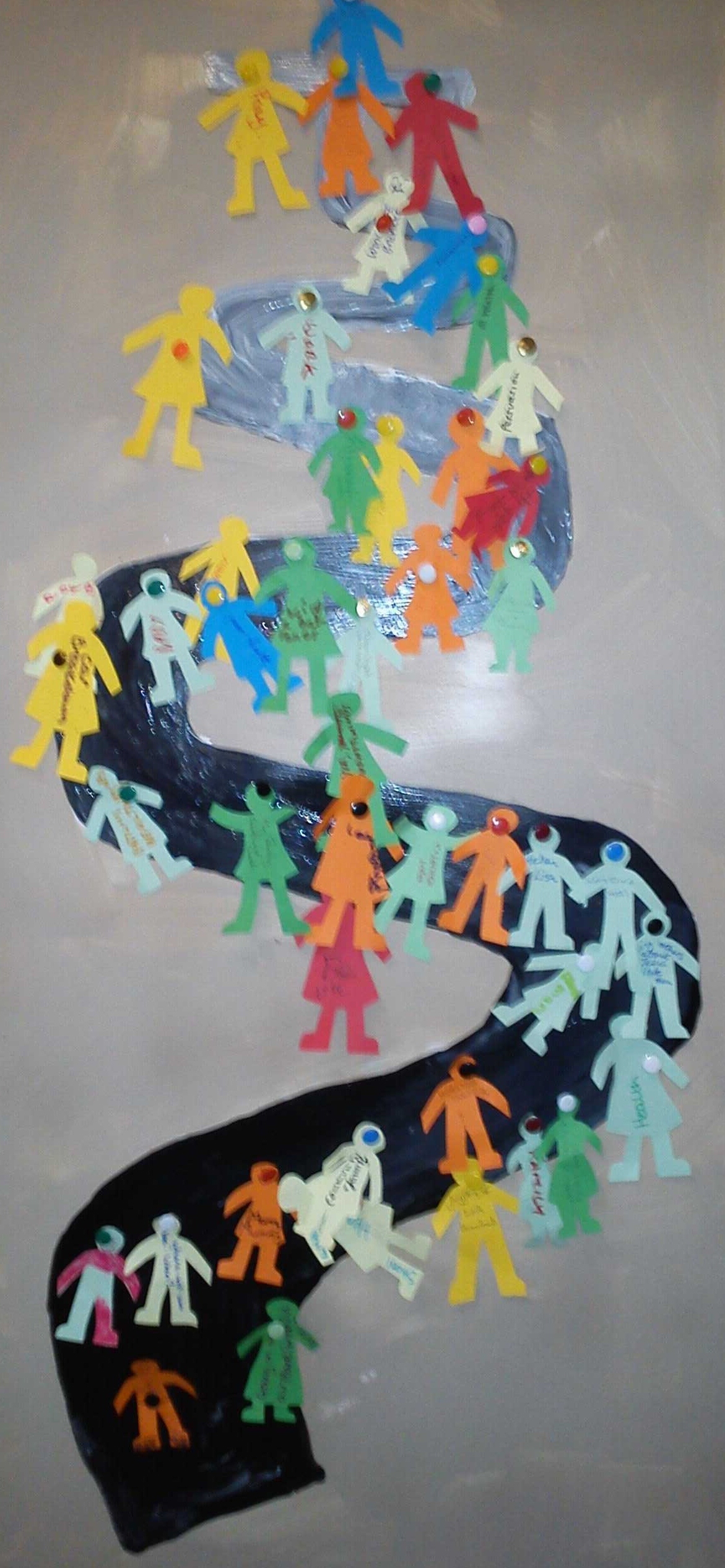
 As we walk the way of the cross again this week, we see for ourselves the depths of sin that led Jesus there, and the depths of love that enabled him to make the journey, even knowing what suffering it would bring. If we allow ourselves to see through the eyes of the crowds, the eyes of the disciples, the eyes of Peter, of Pilate, of the High Priest, and even of Judas, we may also learn more about how we ourselves see Christ. In this way we will be equipped to witness alongside the centurion, the Marys, and the disciples the true power of the resurrection: what it means for us and for the world.

 reverendally.org