What God can and can’t use

Trinity 17 B (2012) Mark 9.38-50

‘Whoever is not against us is for us,’ says Jesus when his friends worry that there are people doing miracles in Jesus’ name who aren’t part of their posse.  The disciples’ worry is a very human one, it’s about control.  It’s a very similar one to the story in Acts when it turns out that a whole load of Gentiles are showing all the fruits of the Spirit, despite not having been baptised.  In both cases, the proof of the pudding seems to be in the eating, or perhaps, by their fruits they are shown to be of God.

‘Whoever gives one of these little ones even a cup of water because they are a believer, then they will not lose their reward,’ Jesus goes on to say. There’s at least a basic lesson here for the disciples: they, the twelve, the inner circle, are by no means the only followers of Jesus, and there is a role in the building of the kingdom not only for apostles, prophets, missionaries and teachers, but for the quieter, less spectacular ministries of hospitality and care.

But this whole passage is about more than that. It’s not completely straightforward reading at first, but there is a hugely important nugget of truth in this reading which needs teasing out. It’s in three parts.

The first part is that God is very good at taking what we do offer and using it to do something amazing. Look at the feeding of the five thousand, when he turned one person’s packed lunch into a hearty meal for a whole crowd. Look at the wedding at Cana when he turned hard work and plain water into finest wine. Look at the parable of the sheep and the goats when he takes the basic human kindness of people who don’t even consider that they’ve been serving God and counts it to their salvation.  God is brilliant at finding in us something good, something worth using, worth encouraging, worth celebrating, seeing even in our hesitant offerings the potential to build his kingdom.

The second part concerns the very real truth that there are things that get in the way of all that. There are things we do and think and say that pollute our kindness, that subvert our good intentions, that poison the good fruit that we might otherwise offer to God.  These things will be different for each of us, but there are certainly some popular besetting sins: anger and resentment, being quick to take offense or slow to forgive, assuming the worst of each other, rather than the best – it is for each of us to discern within ourselves what stumbling blocks we lay down both for others and for ourselves, for these are the things that risk stopping us being able to offer the simple things we have to God.

The third part is that God is also simply amazing at spotting what he can use, and purging away what he can’t use. He sees our sins far more clearly than we do. He knows the difference between real current sins that are actively acting against him, and the memories of past sins that are long forgiven by God and yet still haunt us and cripple us. He is adept at sifting through the complexity of our lives and finding in us things that are worthwhile, precious, priceless… and of identifying those things that need to be excised.  God is the great divider: but the division between the sheep and the goats, and between the wheat and the tares, is not between one person and another, but within each of us, separating out what can be used in the building of the kingdom and what cannot.

And yes, we may be amazed by what it turns out God can use. For even some of our memories of past hurts and wrong-doing can become the cup of water that we offer to a fellow pilgrim.

Trust in God, that he can use far more of each of us than we can possibly imagine. And in that trust, find also the courage to ask God, once and for all, to free us from those few things that really do stand in the way.

For whatever is not against God, can be  used in his service and to his glory.
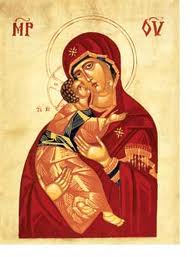
Mary

I never used to understand some people’s fixation with Mary.

That is, until one Christmas when I was at theological college. One of the other students had written a really rather good and thought-provoking nativity play, and I went along to the first read-through as I thought there might be some stuff to do with music that I could help with (I was chapel musician at the time).

The parts were dished out, and by the time it came to me, only Mary was left, so I said I’d read the lines. By the end of the read-through I actually wanted the part, and I got it. It was in that moment of being chosen for something that I hadn’t expected and hadn’t asked for, and then a second, separate moment, of realising that I really wanted it, that I got an insight into why people are so fascinated with Mary and why they venerate her.

Then, on 21st December 2003, which happened to be the fourth Sunday of Advent, I took a pregnancy test first thing in the morning, and then went to church, and, as deacon, read the gospel set for the day: Luke 1.26-38 (the Annunciation), full of the fresh knowledge that I, too, was with child.

I sometimes wonder whether Mary’s been so esteemed by the Anglo-Catholic wing of the Church of England, that the rest of the church hasn’t really known how to honour her.

Her being a virgin has been made into something moral – as if sex is sinful, and as if virginity was somehow an idealised state of womanhood.  All this even when a good few commentators tell us that Isaiah’s prophecy was merely about a ‘young girl’.

Mary’s youth and unquestioning obedience may also elevate her to the status of beautiful-doormat-on-a-pedestal, whereas the real Mary that we read about in the gospels is anything but: she’s thoughtful, courageous, and a prophet of social and political change.

In iconography Mary almost always appears holding the Christ child. Quite rightly, she is often pointing at him, too, as if to say, ‘Don’t look at me, look at him’.

But there are a few images that break the mould – works of art that dare to see Mary as a person in her own right, whose vocation went far beyond being an innocent vessel, and who had a role to play in the growth in body, mind and spirit of the Son of God.

One is the ‘Walking Madonna’ outside Salisbury Cathedral, striding purposefully and full of strength.

The other is Ely Cathedral’s statue of Mary who appears above the altar in the Lady Chapel, hands raised not just in praise of God at the magnificat, but also as Eucharistic president.


Let there be light

The theme for collective worship this morning at my church school was ‘God speaks the universe into being’ – it’s part of a series on how God speaks, which will last all term.

Exploring the creation story in schools is challenging: some of the science behind the origins of the universe is well beyond my non-scientific mind, and it’s not always easy to convey the nuances of ‘metaphorical truth’ as opposed to fact when looking at biblical accounts of (pre-historic) events.

There is a simple but profound beauty in the biblical account of God speaking the word ‘Light’ at the moment of creation, just as there is (to a non-expert like me) a simple but profound beauty to the notion of the universe starting with a Big Bang – a sudden explosion of the potential into the actual.

But how to explore this with a school full of 5 to 11 year olds when you have 20 minutes to do it?

It was at that point that I turned to music, and specifically to the opening chorus of Haydn’s epic choral work, The Creation.

I asked the children to imagine a speck of something tiny, so small that they can barely see it, and yet they know that it’s going to be something amazing. I then played them just a minute’s worth of Haydn, inviting them to enjoy the mystery and the potential, and then really to enjoy the Big Bang.

“And the Spirit of God moved upon the face of the waters.
And God said, ‘Let there be light.’
And there was LIGHT!”

My reward? A school hall filled with faces that were full of awe – smiles, eyes like saucers. I tell them that when Genesis 1 was written down nobody knew about the Big Bang, but they somehow knew that life needed Light, and that there was a moment when everything came into being. And how people of faith believe that God has never stopped speaking light and life into his world.

My question to them?  “What makes you feel alive like that? What brings that kind of light and life into your world?”

The blanket of blessing

Anyone at Stepping Stones (that’s Buckden-speak for Messy Church) today was able to partake of the latest in multi-sensory prayer.

We have always used objects, actions and various items of a multi-sensory nature in Stepping Stones to express our prayers. Among the favourites is the prayer cushion: a large, squashy red heart-shaped cushion that we pass round, taking turns to hug it as we silently ask God to bless the people we love (or the people we find it hard to love, or those we feel might be most in need of God’s blessing).

Earlier in the summer I found the prayer cushion’s natural successor: the blanket of blessing. Like many of the best sermon illustrations, all age liturgical resources and prayer aids, he came from Dunelm Mill.  It is dark pinky-red. It has hearts on it. It is made of the softest of soft fleecy fabric. It is completely irresistible.

Unlike the prayer cushion which could be considered rather individualistic, the blanket of blessing is communal: whole piles of children can be encompassed in its soft embrace (and the blanket itself doesn’t even need to be CRB-checked) and best of all, when one person feels they have been sufficiently blessed, they can take the blanket from around their own shoulders, and drape it over someone else.  ‘God bless Denise’, said Daniel, as he wrapped our churchwarden up in the blanket this afternoon.  ‘God bless Ally, Daniel and Joanna,’ said Mia and William as my children and I were enveloped in fuzzy warm blessings.

The blanket of blessing is here to stay.  I now have to buy another two for my children, so they don’t argue about who gets to use the church one when Stepping Stones is over…

Have you got a blanket of blessing for your church yet?


Sermon for Trinity 14 (B) 9th September 2012

Based on James 2.1-17 & Mark 7.24-30

There are various explanations out there that try and soften the story of Jesus and the Syro-Phoenecian woman. And it’s no wonder: at first glance it simply seems that Jesus is simply being appallingly rude, and changes his mind on a whim when the woman comes up with a cleverer response than he was expecting.  I’m sure I’m not alone in wanting an explanation as to why Jesus doesn’t exactly look very Christ-like in this story.

With my slightly ropey Greek, I can see where people are coming from when they home in on the word ‘dogs’ – they may well be right when they say that the word doesn’t mean ‘nasty wild dogs’ but more like ‘pet puppies’.  Well, that may cut down on the offensiveness of Jesus’ words, but it’s still pretty patronising, so I’m not sure it helps much, on the face of it at least.

Then there are those who say that Jesus knew right away that there was more to this woman than met the eye, that he always intended to heal her daughter, and his words were only ever intended to provoke her into an insight of faith – he was giving her a chance to prove herself.  Again, fair enough, but it still sounds a bit mean.

When I try and understand this story, I find it helps me to think about why it’s been included in the gospel, and why the gospel writer told it in this particular way.  If we assume that every word of the gospels is there for a reason, then we can ask ourselves why these particular verses  are here, and what we can learn from them. 

If this is where we start from, we can start to speculate a bit more, especially if we focus not so much on what Jesus says, but on what the woman says: ‘Even the dogs feed on the scraps that fall from the children’s plates’.  There’s so much in that sentence! 

Why are there leftover scraps?  Are the children not eating their food carefully enough?  Are they leaving the bits they don’t like, perhaps?  Are the children perhaps not very good at eating a healthy balanced diet, and are only eating the parts that appeal to them?  Whether she knows it or not, the woman is critiquing those of the chosen people (largely the religious leaders and teachers of the law) that Jesus himself spends much of his time critiquing.  The woman’s words are very much in line with so much of what Jesus has to say about the Jewish leaders’ rejection of his words.  It’s as if the woman and her daughter, and her clever retort, are an enactment of Jesus’ own words in so many of his parables.  The children have been given a feast of stories and miracles and love and they’ve dropped half of it on the floor, uncaring of the one who made them the meal.

Meanwhile, there seems to be plenty left for the dogs to eat, and perhaps the dogs are in the same room, sitting alongside the family, part of the household. Eating together, eating the same food, sharing a meal – these are powerful symbols of unity and fellowship.  The gospels are full of parables of banquets, stories of Jesus and his friends sitting down to eat together, and our own celebration of the Eucharist is a memorial and re-enactment of the last supper itself. When we share food, we share something far more significant.  We affirm that we are indeed of the same household, the same family, and what family does not include the pets as part of that fellowship? 

Perhaps what this story offers is yet more evidence that it’s the definition of the household that’s being extended.  So many times Jesus reminds the crowds and the leaders, who believe they’ve been born into the right to a special relationship with God, that he can raise up children of Abraham from the very stones under their feet – there is no birthright, no short cut, being part of the household of God brings responsibilities and demands an ongoing loving relationship, not just an accident of birth. 

This is a truth that the crowds don’t find it easy to understand.  And which the religious leaders find offensive and threatening.  And it’s a truth that the story of the Syro-Phoenecian woman lives out.  The household is being redefined, expanded; walls are being torn down between those of different races and backgrounds, because the gospel that Jesus brings turns out to be not only for the chosen people but for all the people.

Perhaps the woman herself is telling Jesus, “I get it – I get that you’re here for us as well as for them – your own chosen people, God’s children, may not understand that, but the dogs are listening and understanding.” 

Or perhaps it is the gospel writer himself who puts those powerful words into her mouth to show that he gets it.  Look at this, he says. Look at this person, a woman, and a foreigner, a gentile, at that. And she’s got a difficult child.  She’s about as much an outsider as we’re likely to come across, and she’s there in the story to show you all that the thing about the gospel being for everyone, not just for the chosen people really is true.  She’s the evidence.  She and her daughter.

Time and time again the gospel writers give the best bits to the outsiders.  Think about the woman at the well in John chapter 4, with her string of ex-husbands and her boyfriend, and who evangelises a whole city. Think about the centurion right at the end of Mark’s gospel who is the one to look at Jesus on the cross and acclaim him as the Son of God.  Think about the centurion who asks Jesus to heal his servant, and makes the astounding declaration of faith, ‘only say the word and he will be healed’.  

The gospels embody this message: that Jesus is for everyone, not just for the chosen people.  They embody that message in stories, in parables, in healing miracles, in offhand comments, in questions, in arguments, in cameo roles and walk-on parts for strangers. And they show time and time again the wealth of teaching and love and healing offered by God, poured out by God onto his people, being rejected and dismissed by the very people who should have lapped it up. 

The dogs would have had rich pickings even with the leftovers.  And we know what Jesus’ attitude is towards leftovers from the story of the feeding of the 5000: not only is there lots to spare, but also none of it gets wasted. 

In all these ways, the gospels subtly build up a picture of God’s generosity, and the way that the household of God grew and encompassed more and more people. It’s a generosity that even today we sometimes find hard to live out in our own lives.  Human beings build walls, we judge, we segregate, even if we don’t mean to. We find those who are different from us difficult.  It may or may not be consoling to find that in today’s epistle, James is writing to a church who clearly need the subtle message of the gospel spelling out for them just as we sometimes do.

Mercy is better than judgement, James writes. It’s what you do that matters more than what you say.  Love your neighbour as yourself, even if your neighbour is different from you and somehow challenging or difficult.  Treat everyone equally and don’t get dragged into the world’s hierarchical view that some people are more significant than others.

Yes, James tells us plainly what Jesus demonstrated and hinted.  The question is not whether we grasp it from the gospel reading or the epistle reading, but whether we accept it, and feast on it, making its wisdom part of our lives, and letting it fuel our words and actions.  In the end, it doesn’t matter whether we’re children or dogs. There’s plenty of food on offer, for any and all that choose to be part of the household when God tells us that the feast is ready.